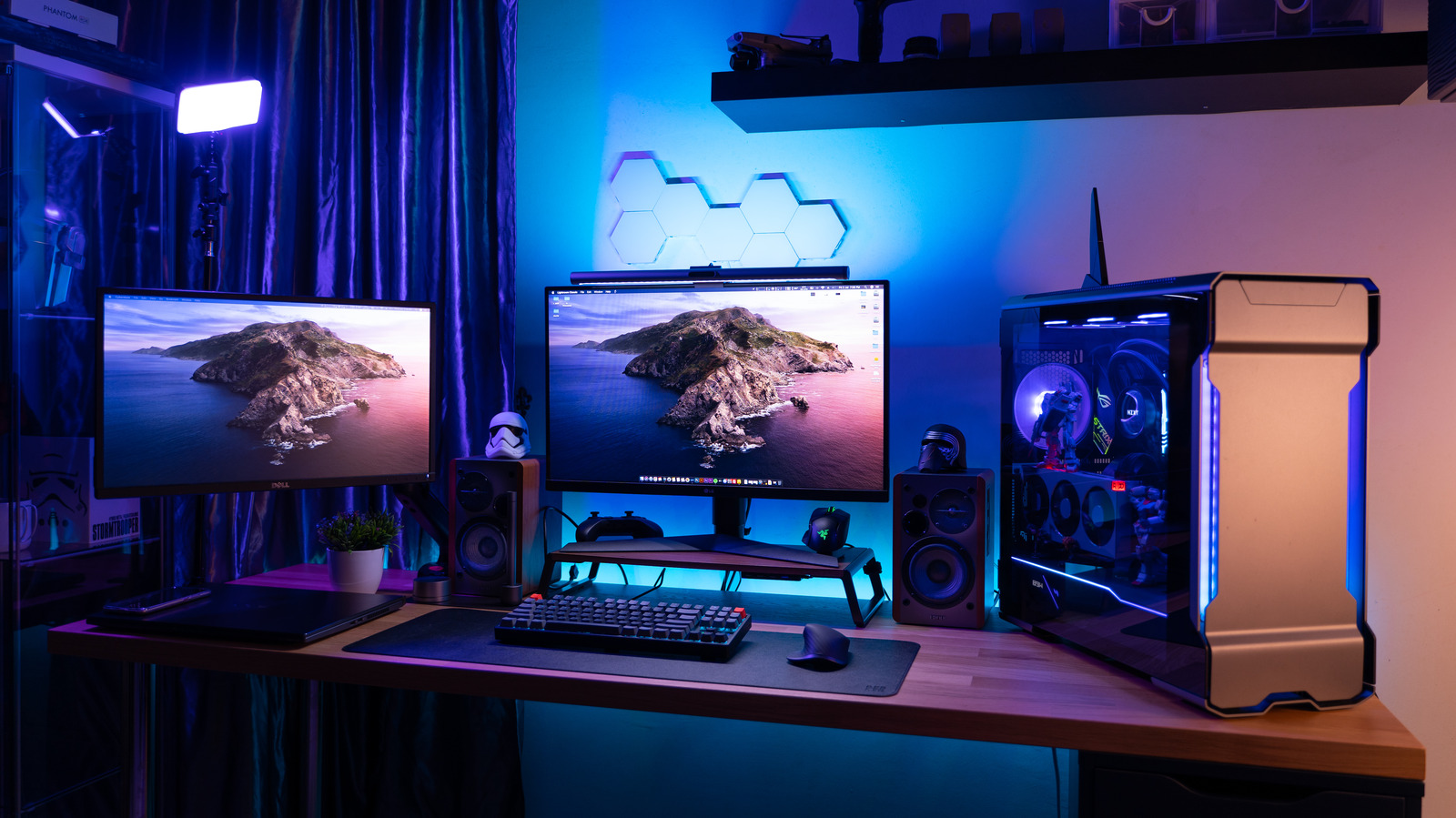
A few months ago, Tom’s Guide put together the first part of its “How to build a gaming PC” guide. In How to Assemble a Gaming Computer that article, we covered which parts you’ll need to construct a machine as well as how to select them.
Assuming you’ve got the parts you need (and good luck with that; it’s a tough time to buy a GPU), all you need to do now is put them together.
Buy one of the best gaming PCs
Also consider the best gaming laptops
PC-building enthusiasts liken this to constructing a complex Lego set, and that’s somewhat accurate — if the Lego set didn’t come with instructions, and every piece had the potential to break while you snapped it into the next one.
Sponsored Links
Loughborough: Incubating innovations that are the perfect fit for business
Loughborough University
Before this project, I hadn’t built a PC for 10 years, and I have some good news and bad news about the process. Good news: It is, indeed, much easier now to build a PC now than it was a decade ago. Bad news: The process can still be pretty confusing if you’re starting from scratch and working by yourself.
Here’s how I put together the new Tom’s Guide test rig, and some of the pitfalls I encountered along the way.
Once again, this should not be taken as PC construction gospel — both PC Gamer and Tom’s Hardware have more thorough guides available for that — but hopefully, it will help other neophyte builders navigate a few common hazards and go from dreaming about a new PC to actually building one.
- Take stock of your parts.
As a reminder, to build a gaming PC, you’ll need (at minimum) a motherboard, a CPU, a GPU, some RAM, a storage device, a power supply and a case. As we predicted in our original article, we had to modify a few of our proposed parts based on what vendors had in stock. - Clean your workspace
This is perhaps one of those “goes without saying” steps, but wherever you intend to build your PC, give the area a good cleaning first. Long, flat wooden surfaces are ideal, although wood can get scratched, so take care when dealing with heavy or sharp components. - Get Windows ready
This is one of those steps that’s easy to overlook, but which might be much harder to do later on. Make a Windows 10 bootable USB drive.
I won’t go into the process of getting a license and installing Windows, since there are a lot of variables involved there, but without some version of Windows, you’ll be stuck staring at the BIOS. And there’s not much to do there.
- Install the CPU
Like a lot of PC-building steps, the process of installing a CPU can vary somewhat depending on your parts — what kind of motherboard you have, as well as whether you’re using an AMD or an Intel chip.
Generally speaking, though, you’ll find a CPU socket on the upper part of your motherboard. Simply lift the latch, fit the CPU into place (it’s designed to fit only one way; if it’s not flush, something is wrong), then replace the latch.
- Install the CPU cooler
This was where I ran into my first big issue. Most guides recommend installing the CPU cooler right after the CPU (understandably), but I decided to go with a liquid cooling system instead of a standard CPU fan.
There are pros and cons to this approach, and comparing the two cooling methods would take its own article. Suffice it to say that with a standard CPU fan, you can simply connect it and then move onto the next step. Installing a liquid cooling system requires you to attach a fan and heatsink to your case, which means the motherboard has to already be in place.
 Site Title
Leave a comment